
Part 2 of 2
Jeremiah 28
It takes a lot of faith to do nothing (Abraham basically waited 24 years for a child)[1]. It takes a lot of faith to obey God and In part 1 we looked at (1) a young man who found himself divorced and without his infant son. He needed a vertical leap in faith to leave that alone and focus on his own spiritual growth. (2) A World War II veteran who felt cheated out of a professional athletic career, and (3) Saint Joyce whose husband was killed by a drunk driver.
While part 1 and 2 can stand alone, reading Part 1 will help you grasp Part 2.
Jeremiah served his nation just before the Babylonian captivity. He was telling people to submit to reduce their punishing as much as possible. Hananiah, a man who claimed to be speaking for God, treated Jeremiah like he was a traitor and encouraged the people to fight the Babylonians.
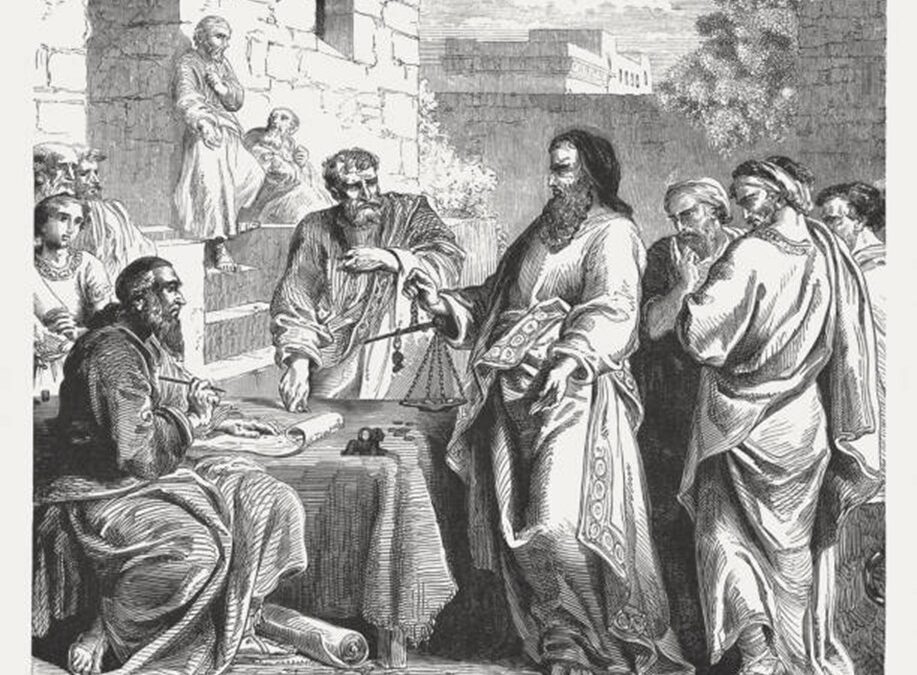
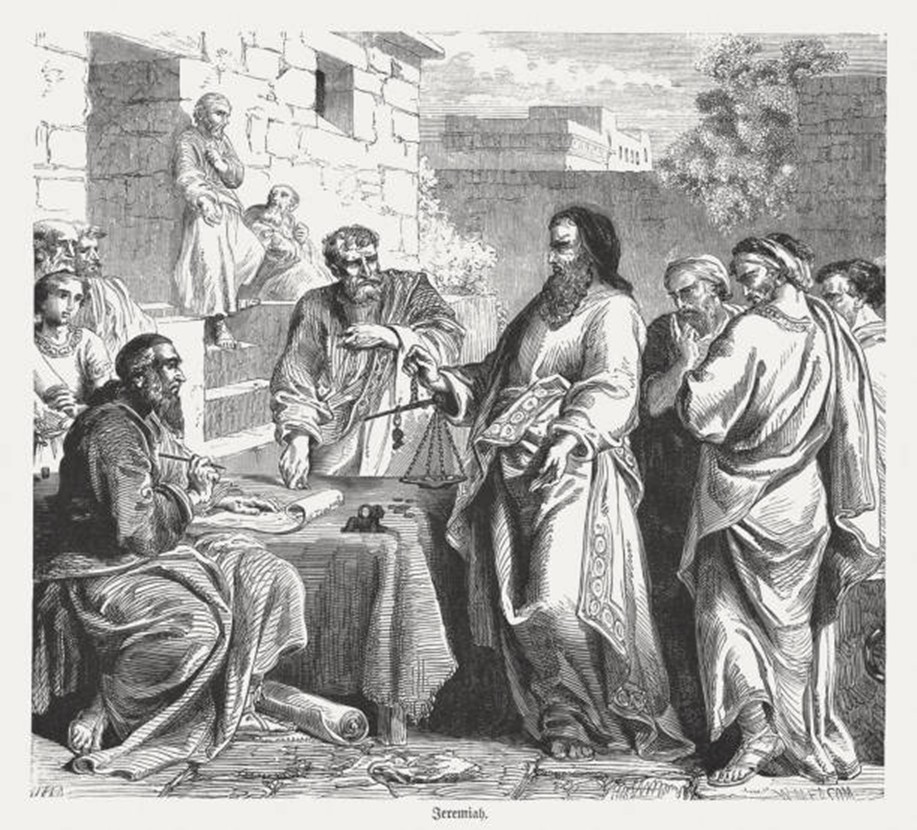
Repeatedly we are told there was a very public confrontation between the two men: “in the presence of the priests and all the people . . . then the prophet Jeremiah replied to the prophet Hananiah before the priests and all the people . . . in the hearing of all the people . . . Hananiah said before all the people” (Jeremiah 28:1c, 5, 7, and 11). Hananiah declared Israel would be delivered from Babylon as he made Jeremiah look like Tokyo Rose.
Sufficiently dramatic to come to a public meeting with a yoke across his shoulder, Jeremiah was a colorful preacher. Equally dramatic, Hananiah broke Jeremiah’s yoke off his shoulders (vs. 10).
Jeremiah was itching to see this man exposed. He wanted God to vindicate him in front of the people. Many people watched these two men disagree with each other.
Verse 11c is where Jeremiah earns our respect and preaches to us: [After Hananiah spoke], “the prophet Jeremiah went on his way.”
Many times, our own sinfulness prompts us to defend ourselves, argue back, and justify ourselves, but “It is to a man’s honor to avoid strife” (Proverbs 20:3). Jeremiah “. . . went on his way.” Solid gold response—in sports parlance, it was perfect 10.00 in which he “stuck the landing” with a very high difficulty factor!
How do we win? How do we grow to look more like Jesus Christ in our attitudes and actions?
First, have a clear awareness of the enemy. Who or what is the enemy? Who’s the bad guy? Scripture says we do not wrestle against flesh and blood (Ephesians 6:12). Our struggle is spiritual; it is not with our critics. We wrestle against the difficulty of believing God could still be at work for our good. Against our doubt. We battle our own sinfulness.
My personal “Hananiah” is not my biggest enemy – I am. You are. If we are itching to correct “our own personal Hananiah,” that is sure to make us lie awake at night and answer our critic, correct him, defend ourselves and churn through the painful video again and again. Such “stinkin’ thinkin’” keeps us awake. Once we get the victory, we are more apt to sleep.
We also do battle with the sin in others and the fallen world system.
Second, we have to know Who we are dealing with and what His Goal is. We are dealing with the Almighty. We are dealing with God. We are doing spiritual business with the God of the universe who is totally impressed and thoroughly delighted with God the Son – so much so that the Father is seeking to make all the redeemed have the attitude and values and actions of the Lord Jesus Christ. So His highest goal is not to vindicate us. His goal is to shape us to be like His Son.
Since God called Nebuchadnezzar My servant (Jeremiah 25:9), God can use a difficult boss, a neighbor, an illness or a family member who is being difficult. God is not short of tools to refine us.
Third, Hebrews 12:3 tells us: “For consider Him Who endured such contradiction from sinful men against Himself lest you be wearied and faint in your mind” (KJV).
Everything that we pass through and everything that passes through us—according to Hebrews 12:3—should motive us to think about the life of the Lord Jesus Christ.
There is nothing we can tell the Lord Jesus Christ about injustice, hardship, suffering or stress. When He was crucified, He did not retaliate, but “instead committed Himself to Him who judges justly (I Peter 2:23).” He had the faith to leave the problem alone.[1] By carefully comparing our lives to His life we gain the perspective we need to continue to leave a given problem alone.
Jeremiah did not have to wait long for vindication—a mere two months (28:1 and 17). Others will wait longer. With most, it will not likely come until departure for a better place.
[1] Unless a Christian is at Matthew 18:16; something has happened that is so serious it must be dealt with.
Recent Comments